

Cookie Policy
Since November 2024, we have been testing a new pricing system for a 9-month period.
The goal is to make climbing more accessible by focusing on solidarity.While the initial results were encouraging, the model gradually reached its economic limits.
This is why, starting July 1, 2025, we will return to our previous pricing system for entries. This was not an easy decision to make, but it is the one that will allow us to keep climbing with you under the best conditions and to continue bringing our projects to life. Thank you for your understanding, your feedback, and your support... even when we have to descend a little before heading toward new summits 💪🧗
Part I: Differentiated pricing?
The neighborhood where Le camp de base is located is rich in cultural and socioeconomic diversity. As in many large cities, many people there face precarious situations due to structural challenges (immigration, single-parent families, undervalued professions, etc.). Others benefit from more favorable economic dynamics. This diversity led us to reflect on how to welcome everyone into a space like ours.
For us, even though this sport has historically been "reserved" for a certain demographic, climbing should be accessible to everyone. We have therefore experimented with a differentiated and conscious pricing model. Those who have the means to pay a little more enable others to climb at a reduced rate. This is about establishing a degree of social justice, ensuring that a passion for climbing is not reserved for a privileged elite.
We offer three rates for access to the climbing gym:
- Mouflon entry – reduced price (€11): for those who need financial support.
- Marmot entry – balanced price (€13): standard rate, which covers operating costs.
- Wallcreeper entry – supporter price (€14): for those who wish to contribute more and support our solidarity efforts.
The standard price is the one that allows the gym to operate sustainably, covering all expenses. The reduced price is intended for those who need financial support, while the supporter price helps fund discounted access for other climbers.
When customers arrive, we explain this system using clear visual aids. We do not comment on their choice of rate, nor do we ask for any justification. Our point-of-sale system records the chosen rates anonymously.
We have also decided to remove certain specific discounts (ULB students, partner gym members, etc.) to make the system simpler and more inclusive. This accounts for less than 3% of our sales, but it allows us to extend benefits to more people and ensure it is clearly understood by everyone.
Mouflon - €11

- Reduced rate -
If you are going through a difficult time or are short on cash.
Marmot - €13

- Balanced rate -
This rate theoretically allows the Base Camp to cover all its needs without running a deficit.
Wallcreeper - €14

- Support rate -
Your situation allows you to pay a little more than the balanced rate to support the mouflon•nes and Le Camp de base!
Part II: Transparency
Before implementing such a system, we believe it is essential for everyone to understand how our expenses are distributed:
- 53% of our expenses are dedicated to our team's salaries, which allows us to maintain a high-quality service.
- 26% of our costs relate to the building, primarily including loans and maintenance.
- 11% is allocated to climbing, covering wall maintenance, hold replacement, and improving the climbing experience.
- Taxes and duties represent 4%.
- The events we organize account for 4% of our expenses.
- The remaining 2% covers our energy costs.
The balanced price, set at €13, represents a break-even point that allows Le Camp de base to operate without a deficit while providing a quality experience for all users.
However, for this system to work, it is crucial that everyone is aware of the impact of their choice.
This model has its limits: if too many people choose the reduced price, the system becomes financially unsustainable. This is why we ask everyone to make a conscious choice and reflect on their own means. By understanding how costs are distributed and the gym's financial needs, every climber can help ensure the long-term viability of this solidarity-based model.
Without this balance, it would be difficult for us to maintain the quality of the services we offer or to continue making climbing accessible to as many people as possible.
Part III: Quantitative results
Before implementing such a system, we believe it is essential for everyone to understand how our expenses are distributed:
- 53% of our expenses are dedicated to our team's salaries, which allows us to maintain high-quality service.
- 26% of our costs relate to the building, primarily including loans and maintenance.
- 11% is allocated to climbing, covering wall maintenance, hold replacement, and improving the climbing experience.
- Taxes and duties represent 4%.
- The events we organize account for 4% of our expenses.
- The remaining 2% covers our energy costs.
The balanced price, set at €13, represents a break-even point that allows Camp de Base to operate without a deficit while providing a quality experience for all users.
However, for this system to work, it is crucial that everyone is aware of the impact of their choice.
This model has its limits: if too many people choose the reduced price, the system becomes financially unsustainable. That is why we ask everyone to make a conscious choice and reflect on their own means. By understanding how costs are distributed and what the gym’s financial needs are, every climber can help ensure the long-term viability of this solidarity-based model.
Without this balance, it would be difficult for us to maintain the quality of the services we offer or to continue making climbing accessible to as many people as possible.
Before implementing this system
Study period:
- 10/24/2023 to 10/23/2024, or 365 days
- 45,246 entries, or an average of 124 entries/day
The proportions were as follows:
- 49% for the reduced rate at €11.50
- 51% for the standard rate at €13.50
This brings us to an average price of €12.50 per single ticket.
Since the implementation of this system
Study period:
- 11/04/2024 to 06/03/2025, totaling 211 days
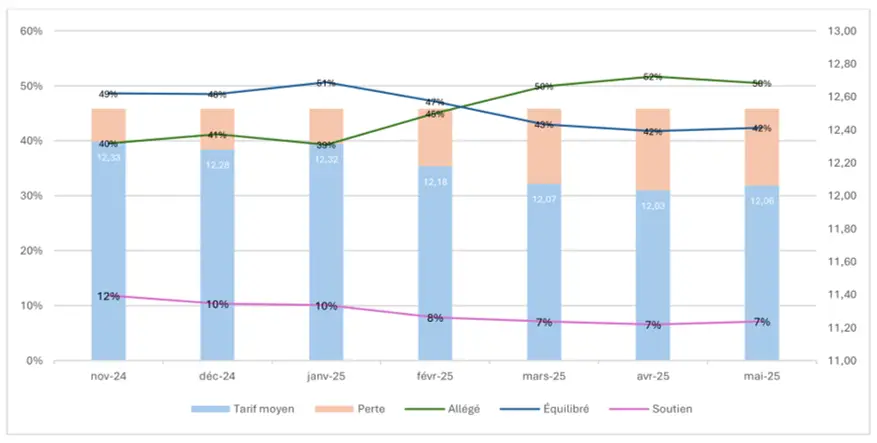
- 22,703 tickets, or an average of 145 tickets/day
The proportions are as follows:
- 45% for the €11 reduced rate, with an upward trend
- 46% for the €13 standard rate, with a downward trend
- 9% for the €14 support rate, with a downward trend
This brings us to an average price of €12.20 per single ticket.
General observations:
- Decrease in 10-session pass sales, likely due in part to the fact that the €11 reduced rate is more advantageous than the standard rate for a pass (€12/session).
- Despite the increase in "single entry" attendance, the revenue per entry is down, raising questions about long-term economic viability.
- Stabilization of the reduced rate above 50% since March 2025.
- Support rate below the 10% mark since January 2025, limiting the system's redistributive effect.
Part IV: Conclusions
A gradual decline… and some limits to clarify
While the early days of the conscious pricing model were promising, we are now seeing a gradual decline in the solidarity-based dynamic. The proportion of entries at the reduced rate has increased, the support rate has decreased, and the average price per entry is dropping every month. As it stands, the model is no longer financially balanced and could eventually jeopardize the economic viability of the venue.
This system relies on collective trust because everyone's economic reality is often invisible.
While our goal is to remain non-judgmental, it is difficult to maintain neutrality when we observe behaviors that raise questions about the appropriation of the system. Sometimes, individuals who appear affluent, whether through their professional situation or lifestyle, opt for the reduced rate without always seeming to consider the solidarity-based purpose of their choice.
In a professional context, some companies have attempted to book sessions at a reduced rate for their employees. A safeguard was quickly put in place: for B2B bookings, only the support rate is now permitted, as we believe it is inconsistent for organizations benefiting from this solidarity-based system to contribute below the break-even price.
These behaviors remain in the minority, but they undermine the collective logic upon which conscious pricing relies. This model requires a form of clear-sighted self-positioning, which involves, in particular, an awareness of the structural inequalities that shape our lives, even when we do not see them.
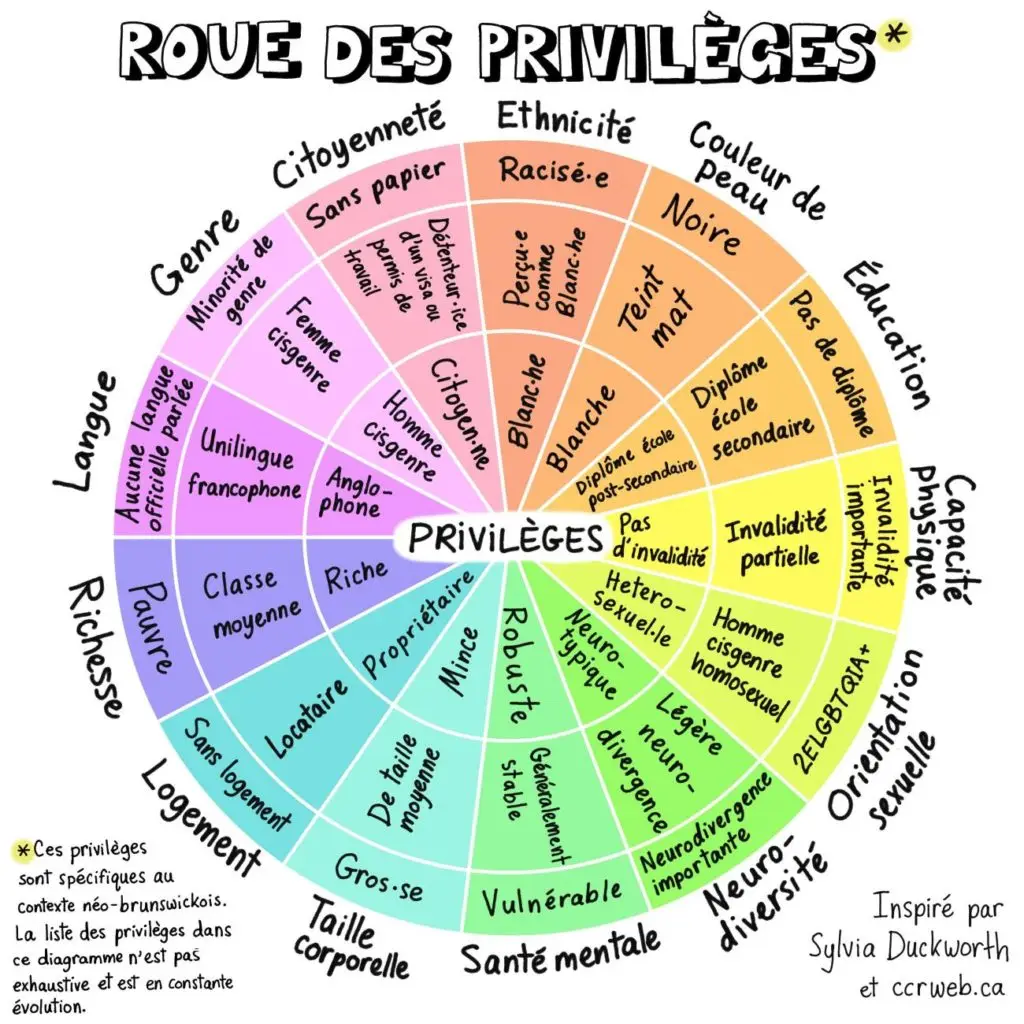
This observation brings us back to a reality that the wheel of power and privilege can highlight: our social, economic, cultural, or professional positions influence our room for maneuver, often in invisible ways. Having privilege is not a problem in itself, but being aware of it is essential when participating in a system based on voluntary contribution.
Conversely, we have also witnessed the opposite: some arts workers with variable and often modest incomes choose to pay the support rate whenever they can (after a gig, a sale, or a paid residency). This type of choice demonstrates that with a good understanding of the model, pricing solidarity can be actively championed by the users themselves.
It is this diversity of behavior, ranging from occasional abuse to exemplary acts of solidarity, that leads us today to question the conditions necessary to maintain such a system in a viable way.
A fragile dynamic, a model to question
The survey we recently conducted among our members confirms the questions raised by the data analysis
- 57% of our clients would change their pricing tier
- 66% of these clients would opt for a lower rate
While indicative, these results reinforce our caution: generalizing the conscious pricing model (to 10-visit passes or subscriptions) would lead to a significant drop in revenue without any guarantee of sufficient compensation. This raises questions about the long-term sustainability of the model.
(Temporary) end of the experiment
The idea of conscious pricing remains meaningful. It has allowed us to ask fundamental questions about access to sports, solidarity, and our role as a committed private entity.
But at this stage:
- the model is no longer financially viable,
- solidarity-based behaviors are fading,
- our economic environment requires stability and predictability.
We have therefore decided, with great disappointment, to reinstate our standard pricing, in order to reconsider its operation, limitations, and drivers, and to reflect on a version that is more robust, fairer, and also economically sustainable.
Accessibility has its limits: a gym is no substitute for social policy
Even with a reduced rate of €11, climbing remains an expensive sport for many people. We are aware of this.
Like any private business, we face significant costs, which we have tried to present with a degree of transparency to our users.
We sincerely believe in making climbing more inclusive and equitable. A private gym cannot replace public policies for wealth redistribution. Our sliding scale pricing is a creative and introspective attempt, but it cannot, on its own, compensate for systemic inequalities. We are trying to do our part, honestly, but without any illusions.
What now?
We remain convinced that a fairer pricing model is possible, but to be sustainable, it must be both inclusive and economically viable.
This is therefore an opportunity to take a step back, analyze the effects of the initiative, and lay the groundwork for a potential return that is better structured, better supported, better explained, and, above all, collectively driven.
Thank you to everyone who believed in this experiment, supported it sincerely, and is helping us imagine other ways to do sports… together.
This conscious pricing model may not yet be up to our ambitions, but it has helped us grow. And we have plenty more ideas where that came from. See you soon for what comes next.
In the meantime, here is some recommended reading…
Among the resources that could fuel our thinking for the next steps of our experiments—which are only just beginning—is a behavioral economics study co-authored by Marc Le Menestrel, a unique figure at the intersection of rock climbing and ethics research.
The power of requests in a redistribution game: an experimental study
It shows that systems based on solidarity and voluntary contribution work best when they are clearly explained, understood, and championed by the community.
An insightful read that could help us think through a potential version 2 of our conscious pricing model.